
Smart Ovens Are Solving Foodservice’s Toughest Staffing Problem
How Automated, Programmable Cooking Technology Helps Operators Do More With Fewer Hands
Finding and keeping kitchen staff has become one of the biggest challenges in foodservice today.
Millions of workers left the industry during the pandemic and never came back. According to the US Bureau of Labor Statistics, 47 million people voluntarily quit their jobs in 2021, and more than 50 million followed in 2022. The leisure and hospitality sector was hit especially hard, posting a quit rate more than double the national average in early 2023.
The result for operators: thinner staffing, higher turnover, and constant pressure to train new employees fast enough to keep service moving. A recent special report from the Foodservice Consultants Society International (FCSI), supported by Ovention, dug into exactly how operators across the country are closing that gap. The short answer is smart oven technology.
At HRI, we’ve represented Ovention for years because their Precision Impingement® ovens do exactly what today’s short-staffed kitchens need: deliver consistent, high-quality results without relying on a deep bench of experienced cooks. Here’s what the FCSI report found, and why it matters for operators across our territory.
Fewer Skilled Hands, More Menu Demands
Every kitchen is feeling the same squeeze: customers still expect speed, quality, and variety, even when there are fewer experienced people on the line to deliver it.
Amy Hegarty FCSI, principal consultant at Foodservice Consultants Studio, pointed out that inconsistency and slow service directly affect customer experience, and in settings like schools and hospitals, customers often can’t just go elsewhere. Operators still need to hit the mark every time, with less room for error and less time to train new hires.
Programmability Removes the Guesswork
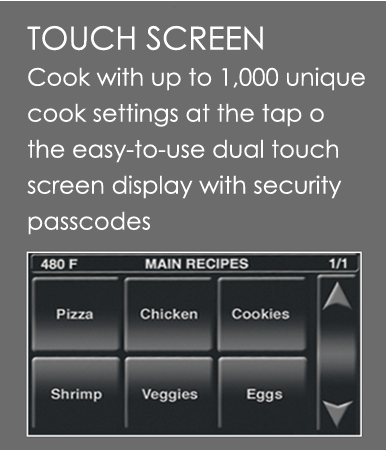
This is where smart ovens change the equation. Instead of relying on an employee’s judgment or experience, programs are built once by a lead chef and then loaded into every oven. Line cooks simply load the product, select the program, and let the oven do the rest.
Hegarty noted that “speed ovens have become more programmable and versatile” in recent years, and that shift is exactly what’s allowing operators to hand off consistency to the equipment itself. A new hire on day one can produce the same result as a ten-year veteran, which takes a lot of pressure off training and turnover.
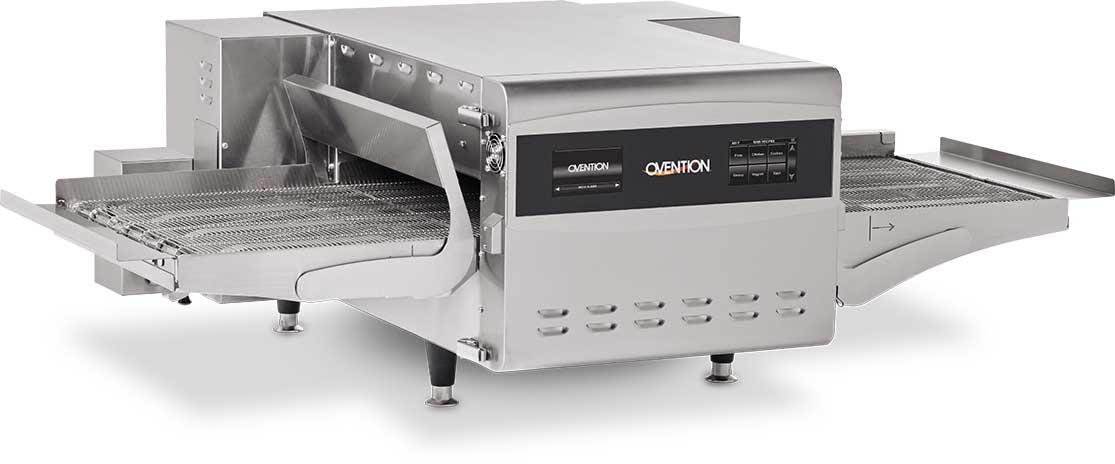
Ovention’s Shuttle 2000, for example, is built around this idea. It has automatic load and unload functions, so an operator places the food, the oven runs its program, and the finished product comes out the other side ready to serve. No guessing, no babysitting the cook line.
Ventless Technology Opens Up New Possibilities
Beyond programmability, one of the biggest advantages highlighted in the report is that many smart ovens don’t require a traditional ventilation hood. That changes where and how operators can put equipment to work.
Chad Rasmussen, sales manager at Ovention, explained that this shift toward automation isn’t limited to one segment. He noted that “labor-saving equipment and automation are now big across hospitality, fine dining, QSR, everywhere.” Ventless ovens can run in spaces that would never support a Type 1 hood, letting operators add late-night menus, grab-and-go stations, or additional service points without a major kitchen build-out.
Proof in the Field: The Intuit Dome
The report’s case study is a good example of what this technology can do at scale. The Intuit Dome, home of the Los Angeles Clippers, opened in August 2024 with 32 Ovention Shuttle 2000 ovens spread throughout the arena’s concession stands.
Ryan Rongo of S2O Consultants, who helped specify the equipment, pointed to the same challenge many of our clients face: concession stands are often staffed by workers with little formal training, and turnover is high because events only run once or twice a week. He said products like the Shuttle “allow operators to maintain quality and consistency” without needing a seasoned chef on every station. The ventless design also meant the team could place ovens throughout the stadium without running new ductwork to each location.
What This Means for Your Kitchen
Whether you’re running a QSR, a hotel kitchen, a school cafeteria, or a stadium concession stand, the takeaway is the same: smart oven technology lets fewer people produce more consistent, higher-quality food, without years of training standing in the way.
That’s a real answer to a real problem, and it’s why we think every operator dealing with staffing pressure should see this technology in action.
See It For Yourself
Reading about smart oven technology is one thing. Watching it load, cook, and unload a perfect product with the push of a button is another.
Stop by one of HRI’s Culinary Solutions Centers in Detroit or Indianapolis and see Ovention’s lineup firsthand. Our team can walk through which model fits your menu, your volume, and your staffing reality, no matter what that looks like right now.
Source: “Smart Oven Technology: The Best Solution to Foodservice Staffing Shortages,” Foodservice Consultants Society International (FCSI), Q2 2025 Special Report, supported by Ovention.
